
Building emotional resilience through routine
Guiding children toward holistic development


Key cognitive development phases
Understanding neuroscience and brain development
Neural circuits expand through sensory integration and secure attachment. Caregivers engineer this framework, providing emotional security essential for grasping complex concepts and facilitating natural language acquisition.
Synaptic pruning optimizes capacity via stimuli. Active play triggers the prefrontal cortex, boosting executive functions. Consistent routines and healthy sleep provide a framework for testing boundaries, ensuring emotional regulation and critical thinking.

Early literacy skill building
Cultivating a lifelong love for reading
Shared reading introduces vocabulary. Exposure to diverse narratives builds empathy and aids cognitive focus during quiet time.

STEM and logical reasoning tasks
Exploring STEM concepts through play
Experiments with water or blocks teach cause-and-effect. Curiosity drives the scientific method, encouraging hypothesis testing.
Fostering emotional intelligence growth
Navigating big feelings with empathy
Labeling emotions helps manage outbursts. Validating feelings builds mental well-being and promotes social competence.

Developing social interaction skills
Adapting to peer group dynamics
Collaborative play teaches negotiation. Resolving conflicts independently builds self-confidence in social settings.

Online safety and digital protocols
Managing the family digital landscape
Quality overrides duration regarding screen time. Active engagement with educational apps promotes learning, whereas passive consumption of media can fragment attention spans.
Selecting age-appropriate online content
Curating media prevents exposure to inappropriate content. Guardians must audit games for data privacy, ensuring the digital environment remains safe.

Creating tech-free zones
Bedrooms remain screen-free sanctuaries

Modeling healthy digital habits
Caregivers set the digital example

Consistent behavioral boundary setting
Establishing rules via positive discipline
Clear expectations provide security. Explaining rules encourages internalization of values. When logical consequences are delivered calmly, children learn accountability without damaging self-esteem or attachment. Consistency is vital.
Playful learning and discovery
Discover learn and grow together

Creative arts and motor skills
Artistic expression aids emotional processing, improves fine motor skills, and develops creativity while teaching color theory.
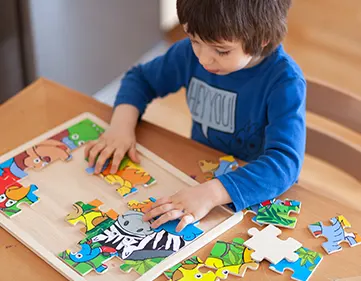
Educational games and logic puzzles
Board games and memory challenges strengthen concentration, problem-solving, patience, and strategic thinking.

Nature walks and outdoor discovery
Outdoor exploration sparks curiosity, teaches biology concepts, improves observation, and connects children with environmental awareness.